Tuesday, November 30, 2010

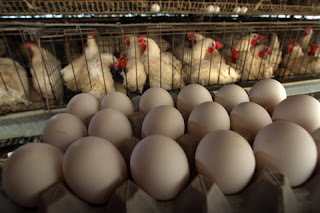
Debate and Votes on Historic Food Safety Bill Continue Today

Votes on key amendments to the Food Safety Modernization Act (S510) continue today, November 30, 2010 in the Senate, as legislators take up measures on the Tester Amendment and the controversial earmarks amendment. Several groups advocating for small farmers have taken stands on the bill, like Food Democracy Now:

Now Big Ag is trying to kill these provisions, which exempt farmers that have sales of less than $500,000 and sell within 275 miles of their farm, and others are hoping to kill the bill outright. We can't let that happen, tell your Senators to vote YES on the Manager's amendment and pass the food safety bill to protect family farmers and consumers.
For a re-cap of the bill and update on the latest votes see this from Food Safety News, which mentions a final vote on the Senate vote should occur today, too.
The Senate food safety bill, which has been inching towards passage the past few weeks, cleared a key procedural hurdle Monday, but Senate leaders put off two votes on amendments and the final vote on the bill to Tuesday morning.

Sunday, November 28, 2010

Politics of Food: Safety Legislation Poised for Senate Vote on Monday, November 29

Following the important food safety legislation (Senate S.510 bill) has been difficult because of the shifting positions by small food growers and multinational corporations. Amendments increased the complexity of the bill, such as the Tester Amendment. However, a key Senate vote appears likely on Monday, November 29 as reported by SFGate.com.

Looking past dire warnings was not difficult, such as statements like how the bill "would outlaw gardening and saving seeds" and how "food safety is a Trojan horse for Monsanto" to dominate more of food production. A November 4 food safety roundtable on Grist.org clarified the positions of some:
The Senate is expected to vote tomorrow [11/17/10] on the Food Safety Modernization Act -- and possibly pass it by this weekend. Yesterday, we posted our Food Fight participants' heated -- and lengthy -- debate over whether S. 510's provisions will harm small farms or producers. They also discussed whether the Tester-Hagen amendment, which creates exemptions for small farms and food processors that meet certain criteria, mitigated this harm sufficiently without diluting the safeguards for consumers.
A 74-25 Senate vote on November 17 allowed the bill to proceed. After the vote an AP report by Mary Clare Jalonick published in the Kansas City Star (and on other sites) underscored the backroom negotiations needed to get final votes, namely promises to accept amendments on earmarks and the Tester Amendment to exempt small farms from the bill's requirements. Notable small farmer and organic farming advocates, like the National Sustainable Agriculture Coalition and Michael Pollan, changed their support on the legislation after promises that the Tester Amendment would be included.

Michael Pollan (The Omnivore's Dilemma) and Eric Schlosser (Fast Food Nation) as well as the Organic Consumers Organization want concrete assurances that the bill, as written, won't apply the regulations explicitly crafted to regulate large industrial facilities (factory farms and industrial agriculture and manufacturers) to small businesses (family farmers, organic growers, farmer's markets, food artisans and local suppliers).
Despite small grower groups taking strong stands against the food safety bill regardless of the Tester amendment, perhaps the changing position of the big ag companies would help confused readers take a stand on the bill. A few days ago the largest food companies -- Monsanto, Archer Daniels, Cargill, ConAgra, to name a few -- reversed their support for the bill because of the Tester Amendment as described in a letter from agribusiness trade groups.

Agribusiness’s real concern about the Tester-Hagan amendment isn’t food safety, but the precedent set by having Congress recognize that small, direct-marketing producers are different, and should be regulated differently, from the large Agribusinesses.

Tuesday, November 16, 2010

USDA's Food Security Report: Food Insecurity at Historically High Levels

The USDA released it's annual report on food security on November 15, 2010. "The food security of U.S. households, when measured over the entire year, remained essentially unchanged from 2008 to 2009, with the prevalence of food insecurity at each level of severity remaining at the highest percentage observed since nationally representative food security surveys began in 1995."

Sunday, November 14, 2010

Waiting for Superman: Bad Schools Cause Poverty...and Force Jobs Overseas

One of the most shocking messages of the film "Waiting for Superman" is that poorly-performing schools cause poverty in inner-city neighborhoods, and not the other way around. This stands on end the idea promoted by most social service and government agencies that poverty in inner-city (and rural areas) leads to poor performance at schools. By extension, if  bad schools cause poverty, then "Waiting for Superman" suggests that bad schools are also the cause of high levels of violence, increased levels of hunger and homelessness, and sending jobs overseas.

The film concludes that declining performance by students in math and science leads  firms like Microsoft to fill vacant jobs with overseas workers. In other words, US companies have no choice because there are not enough qualified candidates here. US firms apply to fill job openings here in the states through the H1B program. However, a much larger pool of non-US workers are employed through offshore service contracts, i.e., employing workers overseas through service contracts.

It's entirely misleading to suggest the decline in student performance in math and science causes companies to offshore jobs. The reason tech firms send work offshore to places like India is because of much lower wages. I worked for a tech company that paid for offshore work in India at one-third (33%) the rate comparable to work here. Specifically, the company billed internal work for around $57 per hour (this includes costs for wages, benefits, and other costs), while billing work for offshore services at $19 per hour.

Management drooled over this pay gap, then went shopping to companies like Satyam and Patni. And American tech firms continue to send jobs overseas, like HP's predicted cut of over 24,000 jobs and IBM's estimated 16-fold increase in offshoring jobs.

For an excellent article reviewing the film and digging deeper into the controversy, read "Grading 'Waiting for Superman'" from The Nation magazine.

US Dept of Agriculture to release report on hunger on Monday, November 15

The US Department of Agriculture will release a report on hunger on Monday, November 15. The report will feature statistics on 2009, a normal lag in reporting statistics, and will likely show an increase in food insecurity throughout the U.S. Last year's report covering 2008 showed 49 million people living at risk of hunger, a huge 11% increase from the previous reporting year.

Chart on food insecurity from last year's USDA report.

Sunday, November 7, 2010

Politics of Food: Film Provides Historical View of Temporary Worker Program

Harvest of Loneliness: The Bracero Program was screened at the new Student Union at University of Missouri--Kansas City (UMKC) on Thursday, November 4. The film documents the history of the program through the personal stories of families that participated in the temporary farmworker effort between 1942 and 1964. If the program is remembered in US history it is portrayed as an innocuous employment campaign to fill jobs left by individuals that fought in World War II and Korean War.

The film depicts the program using inhumane treatment of the workers, mainly recruited from Mexican rural areas. From the overcrowded staging areas to processing facilities, Mexican workers were scrutinized and fumigated before being assigned to work in produce farms in California and the Southwest. Then they were forced to work long hours without proper food, water, shelter, or medical care. The promise of receiving higher wages than paid in Mexico was largely unfilled.


After the screening at UMKC, a student interviewed a local resident Pedro Carrillo, a former bracero, who provided a first-hand account of the maltreatment of workers in the program.


The day after the film I mentioned the program to a first generation Mexican-American at my workplace. He quickly added that his father participated in the program, mentioning how it was nothing short of "legal slavery." Further he stated that his father had not received the agreed upon wages through the Mexican government decades later.

While the film highlights the maltreatment of the workers, the discussion after with Gilbert Gonzales, the filmmaker, reinforced important points of the film, namely:
  • The Bracero program, a joint agreement between the US and Mexican governments, loosened pressure from farmworkers and laborers on the Mexican government, thus allowing the Mexican ruling class to avoid a structural change to provide more for the population.
  • A new guest worker program discussed in the US government and legislature would not improve conditions for today's farmworkers.
  • Because of NAFTA and other "free trade" agreements, conditions in the Mexican countryside are dire for workers and families.
  • U.S. food growers and processors can get away with maintaining a powerful attraction to work in the US because Mexican workers are desperate to maintain a minimal quality of life. American companies profit highly from cheap farm labor, which is still highly dependent on manual labor.
Several excellent resources were shared with the audience, including El Contrato, another film about a bracero program in Canada.

The sponsors of the film screening include MEChA (Movimiento Estdiantil Chicano del Atzlan) at UMKC; The Institute for Labor Studies; The Office of Diversity, Access & Equity-UMKC; and The Cross Border Network.

Thursday, November 4, 2010

Politics of Food: Breaking the Myths of SNAP (Food Stamps)

Shanta Bailey, the new SNAP Outreach Coordinator with Harvesters food bank, presented to area food pantries on the benefits and elgibility of Food Stamps for area residents at a "Feeding More, Feeding Better" conference in downtown Kansas City. She will be working with food assistance agencies to increase applications for SNAP benefits, which was renamed to Supplemental Nutrition Assistance Program from Food Stamps in 2008 to reflect focus on nutrition.

Shanta Bailey, new SNAP Outreach Coordinator with
Harvesters food bank in Kansas City, Missouri.
Shanta's energy and enthusiasm captivated the 50 food pantry representatives and volunteers in the audience, especially when she shared her passion for "empowering our clients" as the principle motivation for her work. She added, "this is about empowerment, this is about knowledge" after discussing myths of SNAP held by eligible residents. She provided an update to the newly emphasized effort led by Feeding America, the national network of food banks, as well as by the US Department of Agriculture. SNAP outreach at a local level involves informing both food pantry workers and their clients to apply for the temporary food assistance benefits. In some areas there is a low application rate despite a high number of elgible residents. Shanta highlighted one common myth held by elgible people: "other people need SNAP more than I do." She countered by emphasizing the benefits are available to all people that apply, that is, there is no limit to funds available for those elgible for SNAP benefits. She added that perceptions are changing from one of a "welfare program" to a program focused on "getting nutritious food to vulnerable households."

Shanta Bailey responds to questions about SNAP
benefit elgibility for food agencies.
She provided a description of the process, noting her experience in the field while working in Junction City, Kansas. Government agencies are attempting to streamline the process by making the application simpler, processing applications quicker, and working with food banks throughout the U.S. to perform the outreach to pantries and clients. She noted that elgibility does not require people seek jobs to get assistance though there are limits to benefits if a person's financial assets exceed a low level of $2000. Students with certain qualifications are also elgible and should apply for assistance, she mentioned.

SNAP stretch food dollars at discount stores like Aldi's and double a person's purchasing power by buying produce at area farmers market that participate in the Beans and Greens programs. The Beans and Greens programs allow SNAP recipients to swipe their EBT card once at a market in exchange for tokens that can be used at any of the stalls.

Shanta noted the stigma surrounding users of Food Stamps/SNAP, but still impressed food pantry workers to reach out to their neighbors and clients to apply for the benefits. Two people made quick comments about people being "too lazy to work" and "some people never work," but she considered how the vast majority of SNAP recipients were led by households with at least one working family member.

The presentation at the food bank conference demonstrates there are many people and organizations working to provide food assistance to people in this area. Shanta's enthusiasm demonstrates the renewed urgency to provide food assistance to fill a growing hunger gap in the US. 

Wednesday, November 3, 2010

Politics of Food: Grassroots Meets the Pavement

The Kansas City Food Policy coalition met today to discuss distribution and production policy as a committee of the group. As meeting facilitator Katherine Kelly with the KC Center for Urban Agriculture indicated in her email announcement, the meeting focused "on policy issues that affect the production, distribution, and access of healthy, local food...which will be taking the lead on figuring out what city/state/federal policy initiatives we could create or get involved in that would help strengthen the local farming and distribution community."

As a newcomer to the group interested in their direction and progress, I noted there was a good collection of representatives from many different types of organizations: local growers, CSA distributors, government health educators, financial foundation sponsors, environmental groups, and university agriculture programs. Several individuals addressed jobs for urban core youth and economic development for the same area. The food policy group knocked around policy ideas suggested by members of the group, including helping small rural farmers adopt cooperative models to leverage purchasing power.

Tina Wurth with the Lincoln University suggested the group support different policies for the urban core, noting the incorrect perceptions about a high level of vandalism and stealing in urban grocery stores. She suggested supporting small businesses in the urban area as a way to improve access to affordable food and counter trends of large stores bailing on the inner city. She also highlighted the financial support for an agriculture program at Kansas City's East High School as a way to engage youth and develop positive concepts about food access and consumption in the city.

Another discussion revolved around how to get produce from gardens or farms, like the one at 1900 East 23rd Street developed by Marty Kraft. He indicated the lack of car traffic as a hindrance to selling the produce. Another person was developing a mobile market and suggested connecting the mobile function with gardens like Kraft's as a way to bring the produce to market.

The facilitators -- Katherine and Becki DeRusseau  -- tasked with getting people involved in drilling down further into the policy ideas committees came up with several categories: institutional procurement practices, land in urban settings, WIC/SNAP/Senior feeding programs, food safety at farmers market, and lack of farmers and youth involvement.

The policy group's fresh energy includes a vast and diverse array of groups and individuals, and seems to stand up to their expansive vision to "advocate for a healthy food system and promote policies" around health in KC. Looking around the room at familiar faces shows their effort starts with a grassroots approach that meets the pavement ready for serious work to make a difference in Kansas City.
Related Posts Plugin for WordPress, Blogger...