Sunday, August 29, 2010

Missouri Farm Organization Enters Fray Over Proposed Livestock Rules
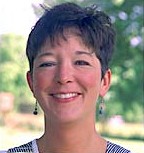
Rhonda Perry (photo: Mo.
Rural Crisis Center)
One Montana newspaper described the rancher response to proposed USDA rules as a "David vs. Goliath movement on to take action for fair market prices against corporate concentration." Missouri Rural Crisis Center's own Rhonda Perry added that "Missouri lost 90 percent of hog farmers since 1985. They (corporations) came in and said this was the wave of the future...." Perry attributed the drastic decline in locally owned farms and ranches to corporate consolidation, adding that consumer prices have increased.

In an unusual display of supporting the "little guy," twenty-one US senators, including Missouri's Claire McCaskill, have signed on to a letter advocating for changes to USDA livestock rules [PDF] that will be the "first step towards leveling the playing field between producers and the packers." The list of senators includes 19 Democrats, 1 Republican, and 1 independent, though another Republican, Senator Bill Bullard, supported the rules change "to restore a fair and just market that will provide economic opportunities for all livestock producers...."

Rhonda Perry, a livestock and grain farmer from Howard County, Missouri, went further than the Senators' support for rules changes: "Now is the time for action. Family farmers and livestock producers need to make their voices heard over the well-heeled lobbyists of the meatpackers. Independent hog and cattle producers in Missouri commend Senator McCaskill for signing-on to the letter and standing up for Missouri's family farmers in support of the rules."

Photo: Food First
Perry participated in meetings in Ft. Collins, Colorado and Redwood Falls, Montana, speaking for the Missouri Rural Crisis Center. The center, based in Columbia, Missouri, has sought to "preserve family farms, promote stewardship of the land and environmental integrity, and strive for economic and social justice by building unity and mutual understanding among diverse groups, both rural and urban" since 1985.

Judging by the level of opposition to the rules changes by large corporate meat producers like Cargill with $108 billion annual revenue, the rules must be favorable to local, small-to-midsize ranchers. However, an AP article in the Friday, August 27, 2010 Kansas City Star seems to indicate that ranchers were evenly divided over the rules changes. A quick check of articles indicate what advocacy organizations like Western Organization of Resource Councils in Montana and Missouri Rural Crisis Center are promoting. "I'm tired of waiting for the government to do something," says Gilles Stockton, a rancher from Montana. "It's stupid to keep arguing whether there is a problem -- it's obvious there is a problem. We need action from the USDA and DOJ to restore competition in the cattle industry."

Tuesday, August 24, 2010

2010 Missouri Hunger Atlas reveals staggering increases in hunger and poverty

Last week the Interdisciplinary Center for Food Security at the University of Missouri in Columbia released its updated Missouri Hunger Atlas. The atlas provides a county-by-county statistical accounting of the levels of hunger in Missouri. The atlas reflects trends documented in news reports and national hunger studies, like the recent report in the Kansas City Star that shows food stamp use in Kansas increasing 20% in a single year from 2008 to 2009. However, given the significant drop in jobs and income in Missouri over the past few years, the report underscores a possibly chronic, long-term hunger problem.

The report does not investigate how to create jobs that will pay sustaining wages; the purpose of the atlas is to show the level of food insecurity and the response to meet the need. Given the drastic decline in local property taxes, decrease in education funding, and drop in job skills training programs, it's difficult to maintain an optimistic view for working families.

Missouri area food banks have seen significant increases in the amount of food distributed to pantries and shelters over the past two years due to the economic crisis. The atlas identifies a strong correlation between poverty and hunger as in the following excerpt.
Food insecurity and poverty are clearly connected—poverty is the best single predictor of food insecurity, and hunger strongly correlates with lower educational achievement, unemployment and impaired work performance.

The atlas is an important resource for concerned individuals and decision makers alike. It helps people track the severity of the problem and the response of government and private service organizations' performance to provide food assistance. It not only reinforces the value and prominence of Food Stamps (now known as Supplemental Nutrition Assistance Program or SNAP) in filling the food gap for working families, but also reinforces trends like "food deserts" in urban and rural agricultural areas like how the Missouri Corn Growers Association discovered this phenomena.

To understand the level of need in Missouri one look no further than how 50% of children in places like Jackson County and as much as 70-80% of children in south-central and southeastern Missouri are eligible for the Free and Reduced Lunch Program as depicted in this chart for the Missouri Hunger Atlas.


Public investment in programs like SNAP is still a key link in food assistance for Americans today. The atlas documents the need and performance served by several national feeding programs like SNAP/Food Stamps, Free and Reduced Lunch Program, Summer Food Service Program, and Women, Infants, and Children (WIC).
The establishment of public and private programs and activities is a necessary ―safety net response to meeting the short-term needs of the food insecure and hungry citizens who inhabit every county and corner of our state.
Despite the drastic decline in food security for Missourians, the Missouri Hunger Atlas underscores the need for healthy eating to reduce the triple threats of obesity, diabetes, and hypertension. The report also makes recommendations to emphasize nutrition education and healthy eating, plus challenges neighborhoods to connect community gardens with local food pantries.

The report boldly suggests in its conclusion that food security should be a basic right "alongside such social concerns as education and health."

Saturday, August 14, 2010

Bluegrass Battles Hunger event in St. Joseph, Missouri on September 25

Big Smith performing spiritual "Study War
No More" at a performance in
Kansas City, Aug. 13, 2010.
Joined up with some friends (and big fans) last night for a musical performance with Big Smith, a band from Springfield, Missouri, which uses acoustic instruments to showcase a solid range of traditional and original music. They performed outdoors under a lightning storm at Knucklehead's Saloon to an appreciative audience. At the conclusion of their performance they touted their participation in the hunger relief benefit "Bluegrass Battles Hunger" at Phil Welch Stadium in St. Joseph, Missouri on September 25, 2010. Proceeds from the concert benefit Second Harvest Community Food Bank in St. Joe.

People in this working class city in northwest Missouri with a history of livestock trade and processing have been struggling with making ends meet. "Overall, all the agencies are overwhelmed by need. There is tremendously more need than what our individual agencies are able to meet at this point," said Jodi Bloemker, director of community investment for the United Way, in an article last year.

Make plans to attend the concert that also features The Farewell Drifters, Sharon Graeff, That Damn Sasquatch, Free State Revival, and Gray Family Bluegrass.

Tuesday, August 3, 2010

World's largest international food aid agencies admit conditions for poor are slipping

Aid groups agree: climate change driving most hunger-related catastrophes
Several hundred conference participants from over 20 countries listened to four panelists deliver reports about the world's largest food aid providers during the annual International Food Aid & Development Conference held in Kansas City on August 2, 2010. The panelists acknowledged the dire conditions for poor with the number of people in hunger rising to one billion people.

Food Aid Symposium panelists (from left): Ann Tutwiler
(not shown), Allan Jury, Jay Sjerven, David Del Conte, and
Dale Skoric.
Jay Sjerven with the Kansas City chapter of the UN Association introduced the four panelists and gave a sober assessment of the difficulty of reaching the Millenium Development Goal (MDG) on hunger. Allan Jury with the UN World Food Program, noted that while only one MDG is directly focused on hunger, all goals impact food security. He also pointed out that addressing food nutrition is key to overcoming hunger. He reflected on bleak statistics like the lack of a decline in hunger in the past ten years.

More than one panelist provided a litany of causes for the worsening conditions for the world's poor: food price instability, personal incomes declining, climate change, drought, conflict and war, but none mentioned a possible contributing factor of Goldman Sachs speculating in agricultural commodities and restructuring markets as mentioned on Democracy Now! radio show on July 16. Jury was frank about the significant decline in food security, but highlighted several countries that are making progress in addressing hunger and the MDG's, namely, Ghana, Brazil, and Mozambique. He concluded by saying the "political will and effort" is needed to reach anti-hunger goals.

Ann Tutwiler, Global Food Security coordinator with the
USDA speaking during the Food Aid Symposium.
Ann Tutwiler pointed out that nearly all childhood deaths occur because of disease have an element of malnutrition as a condition. Tutwiler stated many of the world's poor live in rural areas and agricultural development is an effective way to impact hunger and malnutrition.

Another concept presented by Tutwiler and other panelists was that nutrition and dietary diversity were key to addressing food security. The focus of the "Feed the Future" initiative of the Obama administration focuses on rural infrastructure and market development in several developing countries, including Guatemala, Haiti, Honduras, and Nicaragua in this hemisphere.

David Del Conte with the UN Office for the Coordination
of Humanitarian Affairs at the symposium, Aug 2, 2010.
David Del Conte with the United Nations Office for the Coordination of Humanitarian Affairs described how that organization sees hunger as more of a chronic problem, not just caused by climate catastrophes. However, signficant increase in drought has caused migrations with 23 million impacted by the drought in the Horn of Africa. Del Conte added that while the list of causes for world hunger included conflict and loss of income due to the decline of commodity prices, climate change is the main driver in the increase in hunger. He noted that all five of the 2008 humanitarian appeals were caused by climate events. He highlighted how humanitarian conditions may be improving in certain countries like Zimbabwe and Sri Lanka, though the need to work on capacity-building and prevention was key to reducing hunger and poverty.

Dale Skoric with the Food for Peace program of the US Agency for International Development (USAID) complemented the US food programs' contribution of 2.5 million tons of food, while pointing out the disagreement over in-kind and cash donations to developing countries. However, USAID contributes most of its food aid through in-kind donations to developing nations. The organization is using a "blanket feeding" approach to relieve hunger in countries, such as Guatemala, chosen because of its extremely high level of stunted growth in children.

All four panelists were asked to comment on how their agencies were addressing hunger in relation to the Millenium Development Goals. Allan Jury with the UN World Food Program may have said it best -- there's no immunization shot for malnutrition or hunger; there are "no treated nets like for malaria." He emphasized that nutrition components of anti-hunger programs were crucial to fixing hunger.

Sunday, August 1, 2010

"Return to El Salvador" - A fresh recollection of Salvadoran death squad years and crimes

Filmmaker Jamie Moffett was in Kansas City to screen and discuss the film at Screenland Crossroads on August 1. The film is a riveting retelling of death squad crimes, but leads to a hopeful outlook for present-day Salvadoran society and challenges US audiences to keep El Salvador in their sights.

The film explores a first-hand recollection of the years when El Salvador was inflicted with US-trained death squads leading to the deaths of 70,000 civilians between 1980 and 1992. "Return to El Salvador" follows the lives of two families -- one where a union leader was threatened by security forces and another with a former FMLN militant. The well-organized and flawlessly-produced film steps through the history of El Salvador from the days of the 1992 peace accords, back through years describing large landowners domination of the economy, forward through 15 years of horrendous death squad crimes committed against teachers, union organizers, and peasants by US-trained military forces, and to present-day with the victory of the FMLN presidential candidate Mauricio Funes.


Listening to the former FMLN combatant we hear an account of unthinkable torture and savagery committed -- repeated countless times during the civil war.

By following the union leader and his wife's return to El Salvador, the film tells the stories of Salvadoran refugees to the US. Salvadoran status was an often misrepresented designation since many US government agencies did not acknowledge the threats to their lives. Salvadoran refugees in many cases were sheltered by US churches, which boldly provided sanctuary despite violating US immigration laws.

"Return to El Salvador" threads the needle of justifying armed struggle by having a former FMLN militant describe his motivation for joining the resistance. This position was not a popular one in the 1980's when US peace groups advocated for negotiations between Salvadoran military and rebels without supporting any notion of a justified armed struggle. In a similar vein it's nearly impossible today to hear arguments advocating for armed groups throughout the Middle East protecting their homeland -- to do so brings labels of pro-terrorist -- despite a decade of US-sponsored war and occupation.

The film expanded the story by delving into a description of how the Central America Free Trade Agreement (CAFTA) has destroyed agriculture prices in El Salvador, ruining opportunities and livelihoods for many farmers there. "Return to El Salvador" also follows a significant US movement to close the School of the Americas in Ft. Benning, Georgia.

Filmmaker Jamie Moffett discusses
the film in Kansas City (8/1/10)
A pivotal part in the film is the tragic disappearance and murder of activist Marcelo Rivera, who opposed gold mining by the Pacific Rim company. The Salvadoran military lied about his death. Filmmaker Jamie Moffett described after the film screening in KC (see photo) how several people in El Salvador have been indicted for the murder, but the architects of the crime have slipped prosecution. In answer to a question about what can people in the US do to support Salvadorans, Moffett shared the work of several organizations and encouraged people to take action in other ways.

Perhaps the lesson for audiences today is that the horrendous crimes committed in El Salvador are not isolated, and US complicity in the crimes is not a left-wing conspiracy. The thread of a destructive US foreign policy weaves its way through Vietnam, Guatemala, Nicaragua, Grenada, Panama, Iraq, and Afghanistan, among other nations. We may not agree on the cause or reasons, but these US-sponsored wars leave in their wake the tragic deaths of millions of civilians and destroyed societies.
Related Posts Plugin for WordPress, Blogger...